

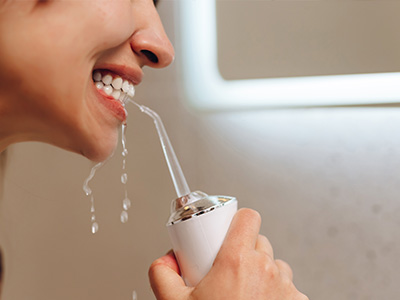
Daily brushing removes the bulk of surface plaque, but the tight spaces between teeth and along the gumline require a different approach. Traditional string floss works well for many people, yet it can be awkward, uncomfortable, or difficult to use correctly—especially for those with limited dexterity or dental work that creates tight or irregular spaces. A water flosser provides an alternative that many patients find easier to adopt consistently.
Water flossers use a targeted stream of pulsating water to dislodge food particles and biofilm from between teeth and below the gumline. That action complements brushing by reaching areas a toothbrush cannot and by helping reduce irritation caused by improper flossing technique. For people who avoid flossing because it’s time-consuming or painful, a water flosser can be a practical way to improve daily oral hygiene habits.
Adopting a tool you’ll actually use matters more than the brand name. Still, among water-flossing devices, systems designed specifically for oral hygiene often offer the combination of comfort, adjustable power settings, and reliable tip design that makes them effective. Patients who switch to a daily water-flossing routine usually notice that their mouths feel cleaner and that bleeding or sensitivity associated with inconsistent flossing diminishes over time.
Water-flossing systems operate on two simple principles: mechanical disruption and fluid dynamics. The unit generates a pulsating stream of water that alternates pressure and flow, which mechanically loosens and flushes away plaque and debris. The pulsing action also stimulates circulation in the gum tissue, which can support healing and reduce inflammation when paired with good overall oral care.
Most systems offer adjustable pressure settings and a variety of tips to match different needs—orthodontic tips for braces, plaque-seeking tips for periodontal pockets, and standard tips for everyday use. Choosing the right tip and pressure level matters: lower settings are ideal if you’re new to water flossing or have sensitive gums, while higher settings can be used once you’re comfortable to maximize cleaning between tight contacts and around restorations.
Clinical studies have shown that, when used daily and correctly, water flossers can help reduce bleeding and gingival inflammation. That said, the device is part of a broader hygiene routine—effective results come from consistent use alongside regular brushing and professional dental care rather than from any single product alone.
Water flossing is particularly useful for patients with specific oral health situations. People wearing braces or clear aligners find a water flosser helpful for removing trapped food around brackets, wires, and aligner edges. Likewise, individuals with crowns, bridges, implants, or wide contact areas can achieve better cleaning in spots where string floss may not conform well.
Patients with limited manual dexterity—due to arthritis, neurological conditions, or age-related decline—often struggle with traditional flossing motions. A water flosser requires less fine motor control and can make it far more realistic to achieve a daily interdental clean. Those who experience gum bleeding or gingival sensitivity may also benefit from a gentler, water-based approach that is less likely to irritate tender tissue.
People managing periodontal concerns, such as deeper gum pockets, should view a water flosser as a supportive tool rather than a replacement for professional periodontal care. When incorporated into a personalized oral health plan, it can help maintain pocket cleanliness and reduce bacterial buildup between visits.
Getting the most out of a water flosser starts with a few practical habits. Begin with the lowest pressure setting if you’re new to water flossing, and gradually increase as your gums adapt. Lean over the sink to allow water to flow out easily, and aim the tip at a 90-degree angle to the gumline, moving systematically around the mouth—following the outer and inner contours of both upper and lower teeth.
Spend about one to two seconds per contact area and be deliberate about reaching behind molars and around restorative work. For patients with braces or periodontal pockets, using specialized tips recommended by your dental team can improve reach and effectiveness. Replace disposable tips according to manufacturer guidance or sooner if they show wear, and empty and dry the reservoir after each use to reduce microbial growth and keep the device hygienic.
Regular maintenance extends beyond the reservoir. Clean the handle and tip storage area, inspect O-rings or seals, and descale the system periodically if you have hard water. If you’re unsure about settings, tip selection, or cleaning intervals, your dental hygienist can show proper technique during a routine visit so you feel confident using the device at home.
A water flosser is most effective when used as part of a consistent daily routine that includes twice-daily brushing with a fluoride toothpaste and regular professional cleanings. Think of the device as an adjunct—something that helps you reach where brushing alone cannot. For many patients, the ease of use increases compliance, which is the biggest predictor of long-term oral health improvements.
At Advanced Dental Care of Las Colinas, our team evaluates each patient’s oral anatomy, restorations, and specific challenges before recommending tools and techniques. Whether you have implants, orthodontic appliances, or a history of gum sensitivity, we can advise on the right tips, pressure settings, and frequency to complement your home care. Many patients find that a tailored approach yields the best long-term results.
When incorporated consistently, water flossing can reduce daily plaque buildup and make professional cleanings more productive. It’s not a quick fix, but a practical, sustainable option for people who want to improve interdental cleaning without the frustration some experience with string floss. If you’d like guidance on whether a water flosser is appropriate for your needs, or want a hands-on demonstration, contact us for more information.
Summary: Water flossing is an evidence-supported, user-friendly way to improve interdental cleaning when used correctly and consistently. It’s especially helpful for patients with braces, restorations, dexterity limitations, or gum sensitivity. If you’re curious whether a water flosser could benefit your oral health routine, please contact us for more information.
A Waterpik is a water-powered oral irrigator that uses a pressurized, pulsating stream to remove plaque and debris from between teeth and along the gumline. Unlike traditional string floss, it delivers a targeted flow of water that can reach interdental spaces and shallow periodontal pockets with less manual manipulation. The device typically includes a reservoir, a pump, and interchangeable tips designed for specific cleaning needs.
While water flossing does not completely replace every role of string floss for all patients, it offers a practical and often easier-to-use alternative that many people can perform more consistently. The irrigating action helps dislodge food particles and reduce bacterial buildup in areas a toothbrush cannot reach. Dental professionals frequently recommend it as part of a comprehensive daily hygiene routine tailored to each patient.
Regular use of a Waterpik helps reduce bleeding and gum inflammation by removing bacteria-rich plaque from the gingival margin and interdental spaces. Its gentle, pressurized flow flushes out trapped debris that contributes to bad breath and early gum disease while stimulating gum tissue. When combined with effective brushing, water flossing enhances overall plaque control and oral cleanliness.
People with limited dexterity, tight contacts, or dental restorations often experience measurable improvements in comfort and hygiene when they add an irrigator to their routine. The device supports periodontal maintenance by allowing patients to clean areas that are difficult to reach with traditional tools. Your hygienist can evaluate whether these benefits align with your oral health goals.
A Waterpik is particularly useful for people with orthodontic appliances, dental implants, bridges, crowns, or periodontal pockets where traditional flossing is difficult. It is also a good option for patients with arthritis or limited hand mobility who struggle with string floss. Adolescents and adults who have trouble maintaining a consistent flossing habit often find irrigation easier and more achievable.
Individuals recovering from oral surgery or managing chronic gum conditions may be advised to use an irrigator as part of their healing and maintenance protocol, under professional guidance. It should augment—not replace—professional dental care and any home care steps recommended by your dentist. Discuss your medical and dental history with your provider to ensure a Waterpik fits your treatment plan.
To use a Waterpik, fill the reservoir with lukewarm water, select the appropriate tip, and start at the lowest pressure setting. Lean over the sink, place the tip in your mouth, and aim along the gumline while moving sequentially from tooth to tooth so the pulsating stream cleans both the front and back of each tooth. Maintain a steady pace and allow the water to flush debris into the sink rather than swallowing it.
Begin with short sessions of about one minute and increase duration as you become comfortable with the device, adjusting pressure gradually to avoid irritation. Pause and reduce pressure if you experience discomfort, and consider practicing technique with guidance from a hygienist. After use, rinse your mouth and empty the reservoir to minimize bacterial growth in the unit.
When used according to manufacturer instructions and professional guidance, water flossers are generally safe for patients with braces, dental implants, crowns, and bridges. The irrigating action cleans around brackets, wires, abutments, and restoration margins without the risk of fraying or snapping that can occur with string floss, making it an effective adjunct for many prosthetic and orthodontic situations. Choosing the correct tip and pressure setting helps protect delicate tissues and restorations.
For implants and areas with periodontal pockets, a gentle tip and controlled pressure are important to avoid forcing debris deeper into tissues. Your dentist or hygienist can recommend the appropriate tip and pressure based on the type of restoration and the condition of your gums. Regular professional exams ensure that home irrigation supports long-term oral health without unintended complications.
Most patients benefit from daily use of a Waterpik as part of a consistent oral hygiene routine, which helps maintain plaque control and gum health between professional cleanings. Using the irrigator once every day is a practical, effective goal for many people and supports reductions in bleeding and inflammation when combined with brushing. Consistency and proper technique are more important than precise timing.
Some people prefer to use the Waterpik before brushing to dislodge debris for more effective brushing, while others use it after brushing to flush away loosened plaque. Both approaches can be effective; the best choice depends on personal preference and professional recommendation. Consult your hygienist to determine the timing that best complements your home care and oral health needs.
A Waterpik can be a valuable adjunctive tool for managing gingivitis and reducing periodontal inflammation by removing bacteria and food particles along the gumline. Its pulsating stream can access shallow pockets and help reduce bleeding and sensitivity when used correctly and regularly. For mild to moderate gingival concerns, many patients see improvements in gum health with combined use of irrigation and brushing.
For established periodontitis or deep periodontal pockets, professional periodontal treatment remains essential and irrigation should be used under clinical guidance. In those cases, your provider may recommend specific tips, pressure settings, or medicated rinses to enhance outcomes and avoid complications. Close follow-up with your dental team ensures that home irrigation effectively complements in-office therapy.
After each use, empty and dry the reservoir and allow the unit to air out to reduce residual moisture and bacterial growth. Clean removable tips and the reservoir periodically with warm, soapy water, and run clear water through the system to flush internal tubing. If you live in an area with hard water, monthly descaling with a mild vinegar solution or a manufacturer-recommended cleaner helps prevent mineral buildup.
Follow the manufacturer's guidelines for tip replacement and inspect tips for wear or discoloration; most tips are replaced every three to six months depending on frequency of use. Store the device in a clean, dry place and avoid submerging the base unless the model is designed for that purpose. Proper maintenance preserves performance and hygiene over time.
Begin with the lowest pressure setting and increase only as comfort allows to avoid gum irritation or soft tissue trauma. Many models provide a dial or digital controls so you can fine-tune pressure; selecting a setting that removes debris without causing bleeding is ideal. If your gums are sensitive or inflamed, remain on a gentle setting and seek advice from your dental hygienist.
Patients with heavier plaque buildup may gradually move to higher settings as tissues become healthier, but adjustments should be gradual and monitored for adverse effects. For postoperative care or compromised tissue, follow any pressure restrictions provided by your clinician to prevent disruption of healing. Your dental team can recommend a safe range based on your oral health and restorations.
For tailored guidance on whether a Waterpik is right for you and how to use it most effectively, consult your dental team at Advanced Dental Care of Las Colinas. Our hygienists and dentists can demonstrate proper technique, recommend specific tips and pressure settings, and integrate irrigation into a personalized home care plan that supports your oral health goals. Hands-on coaching often helps patients achieve better results more quickly and safely.
If you have particular concerns such as implant maintenance, orthodontic hygiene, or ongoing periodontal treatment, professional evaluation ensures that irrigation supports your therapy without unintended consequences. Schedule a consultation with Dr. Dunn or one of our hygienists to review your oral health and receive customized recommendations. We can help you select the right model and create a consistent routine that fits your needs.
Quick Links