The image shows a close-up view of multiple dental implants with visible screws, set against a blurred background.

Implant Dentistry

Restoring Missing Teeth with Predictable Implant Solutions

Missing teeth affect more than your smile — they change the way you chew, speak, and how your face ages over time. Dental implants are engineered to replace the entire tooth structure, not just the visible crown, which is why they are widely recognized as a durable, functional solution for tooth loss. Patients who choose implant therapy typically regain much of the comfort, stability, and appearance of their original teeth.

Implants are titanium or titanium-alloy posts surgically placed into the jawbone to act as artificial tooth roots. Over time, the surrounding bone integrates with the implant in a process called osseointegration, creating a strong foundation for a crown, bridge, or denture. Because the implant replaces the root, it helps preserve the jawbone and supports the facial contours that might otherwise change after tooth loss.

At our practice, we focus on creating individualized treatment plans that balance long-term function with a natural appearance. We’ll evaluate your health history, oral condition, and aesthetic goals to determine whether implants are the best path forward for restoring your smile and oral function.

A woman holds a model mouth with teeth inside while standing in front of a dental chair where another person is seated.

How implants compare to other tooth-replacement options

Traditional bridges and removable dentures remain valuable options for many people, but implants offer specific advantages that make them the preferred choice for long-term tooth replacement. Unlike removable prostheses, implants are anchored in bone, which eliminates the risk of slipping and often improves comfort. Compared with bridges, implants protect neighboring teeth from being altered to support a restoration.

Because implants stimulate the jawbone, they slow or prevent the bone loss that usually follows tooth extraction. That preservation of bone not only helps maintain chewing function but also preserves the shape of the lower face and smile. For many patients, these combined benefits lead to improved nutrition, clearer speech, and greater confidence in daily life.

Deciding between implants, bridges, and dentures depends on many factors: the number of missing teeth, bone volume, medical history, and patient preferences about permanence and maintenance. We work with each patient to explain the trade-offs and select a plan that meets their needs while prioritizing long-term oral health.

Understanding the Implant Treatment Journey

What an implant restoration involves

The implant treatment process typically begins with a thorough evaluation that includes a clinical exam, X-rays, and often three-dimensional imaging. This diagnostic phase allows us to see the bone quality and anatomy, identify any areas that may need augmentation, and plan implant placement with precision. Once a plan is confirmed, the surgical placement of the implant is scheduled.

Placement is usually performed under local anesthesia, and many patients choose light sedation for added comfort. The implant is positioned in the jaw and covered to allow healing. Over the following weeks to months, the implant integrates with the bone. After integration, an abutment is attached and a custom restoration—such as a crown or bridge—is fabricated to match your bite and appearance.

Some treatment approaches include provisional (temporary) teeth immediately after placement, while others wait for full healing before placing a permanent prosthesis. Your personalized plan will explain timing, expected healing, and how we manage comfort and function throughout the process.

Preparing for success: bone grafts and site optimization

Not every mouth has ideal bone volume where implants are needed. When bone has diminished due to prior extractions, periodontal disease, or injury, grafting procedures can rebuild a stable foundation. Bone grafts use patient bone, donor material, or synthetic substitutes to create the volume and density required for predictable implant integration.

Site optimization may also include sinus lifts, ridge augmentation, or staged extractions to prepare an area for implant placement. These procedures are planned conservatively and performed with the goal of supporting a restoration that is both functional and easy to maintain over time.

By investing time in careful planning and site preparation, we increase the long-term predictability of implants and help ensure restorations remain comfortable and stable for many years.

Which implant options fit different needs?

Single-tooth replacements and conservative choices

For one missing tooth, a single implant topped with a custom crown restores the tooth without touching adjacent natural teeth. This conservative approach preserves remaining tooth structure and often provides the most natural-feeling outcome. Single implants are a predictable, long-term solution for patients who want a discreet, durable restoration.

Bridges supported by implants for multiple missing teeth

When two or more adjacent teeth are missing, implant-supported bridges can replace the space without relying on neighboring teeth for support. Strategically placed implants hold a bridge in place, delivering excellent chewing function and preserving bone beneath the restoration. Compared with traditional bridges, this option often improves longevity and oral health by avoiding alteration of healthy teeth.

Restoring a full arch: fixed and removable implant solutions

Full-arch implant restorations range from fixed, non-removable prostheses to implant-retained overdentures that snap into place for added stability. Fixed restoration options use several implants to support a full arch of teeth and feel much like natural dentition. Implant-retained overdentures provide improved retention and comfort over conventional dentures while still being removable for cleaning.

Which full-arch approach is best depends on bone availability, patient preferences about removability, and long-term maintenance considerations. We’ll review the pros and cons of each solution to help you choose a predictable option that fits your lifestyle.

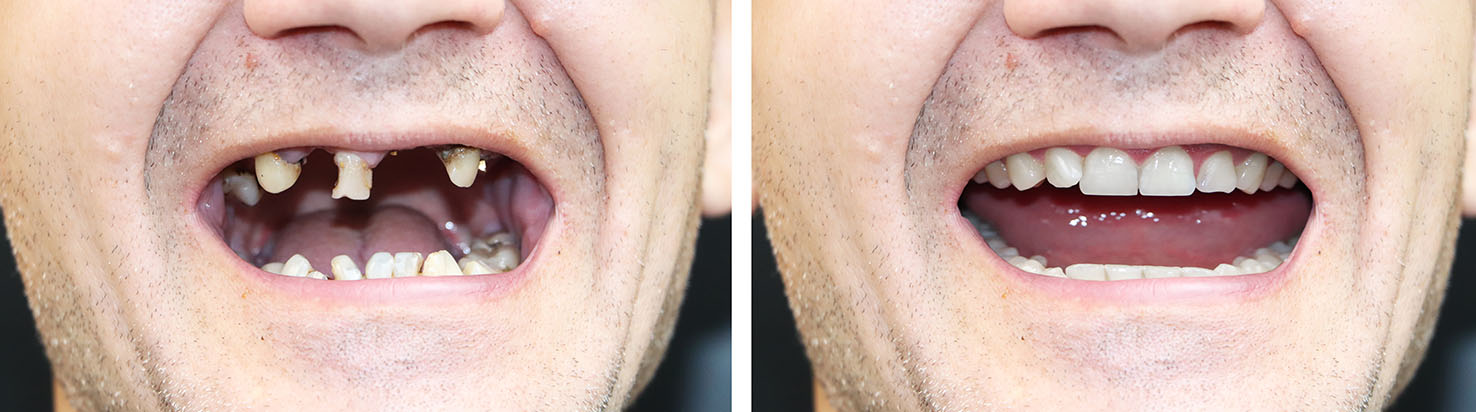
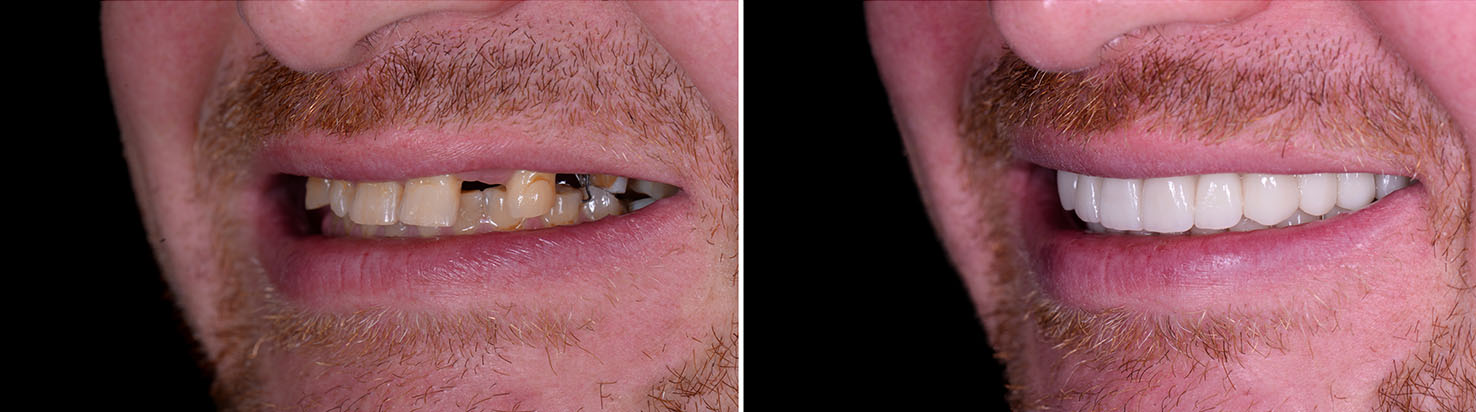
A composite image showing a man's face with four different expressions, each displaying varying degrees of tooth decay and dental issues.

Evaluating candidacy and long-term care

Who makes a good implant candidate?

Implants are a versatile option for many adults, but candidacy depends on overall health, oral condition, and lifestyle factors. Good candidates have sufficient bone or are willing to consider grafting procedures, healthy gums, and a commitment to daily oral hygiene and regular dental care. Certain medical conditions or habits, such as uncontrolled diabetes or heavy tobacco use, require evaluation and management to improve predictability.

During your consultation we’ll review medical history, medications, and any risk factors that could affect healing. If implants are appropriate, we’ll tailor a treatment sequence that safely moves you from consultation to a restored, functional smile.

Maintaining implants for lasting results

Once implants are in place, ongoing maintenance is key to long-term success. Daily brushing and flossing around the restoration, routine professional cleanings, and periodic examinations help detect potential problems early. Implants do not decay like natural teeth, but the surrounding tissues can still be affected by gum inflammation or infection if not properly cared for.

We provide patients with clear home-care instructions and a maintenance schedule suited to their individual needs. With proper care, implants often deliver reliable function and comfort for many years, preserving both oral health and quality of life.

Making an informed decision about implant treatment

What to expect from a consultation and treatment plan

A helpful consultation balances clinical detail with clear explanations. We’ll review imaging, discuss recommended procedures, explain timelines, and outline post-operative expectations. Our goal is to ensure you understand each step of treatment, from surgical placement to final restoration, so you can make a confident decision about care.

Throughout treatment we emphasize comfortable, patient-centered care and clear communication. Whether you have questions about surgical techniques, prosthetic materials, or how an implant will look and function, we take time to address concerns and tailor recommendations to your priorities.

Ready to learn more about implant options?

If you’re considering a permanent solution for missing teeth, contact us to arrange a consultation. We can review your case, explain the implant process in practical terms, and help you choose a plan that supports durable function and a natural appearance. Advanced Dental Care of Las Colinas combines clinical experience with modern technology to help patients restore healthy, confident smiles.

Please reach out to schedule an appointment or to request more information about implant dentistry and what it could mean for your oral health.

Frequently Asked Questions

What are dental implants and how do they work?

+

Dental implants are small, biocompatible posts that are surgically placed into the jawbone to replace missing tooth roots. Once an implant integrates with the surrounding bone through osseointegration, it forms a stable foundation for a prosthetic tooth or dental appliance. This stability restores chewing function and helps preserve jawbone volume that otherwise diminishes after tooth loss.

An abutment connects the implant to a custom crown, bridge, or denture to recreate the look and function of a natural tooth. Implants can support a single restoration or multiple teeth depending on the clinical plan. Proper planning, precise placement, and careful restoration are essential for predictable, long-term results.

Who is a candidate for dental implants?

+

Good candidates are generally adults in good overall health who have adequate bone to support an implant and healthy gum tissue free from active infection. Conditions such as uncontrolled diabetes, heavy smoking, or certain medications may affect healing, but many patients with controlled medical issues can still be candidates after evaluation. A complete clinical exam and imaging are required to determine individual suitability.

At Advanced Dental Care of Las Colinas, we review medical history, oral health, bone volume, and bite relationships to develop a personalized recommendation. When bone volume is insufficient, procedures like bone grafting or sinus augmentation can often prepare the site for implant placement. The final treatment plan balances clinical needs with the patient's goals and risk profile.

What types of dental implant restorations are available?

+

Treatment options include single-tooth implants, implant-supported bridges, implant-retained dentures, and full-arch fixed restorations. Single implants replace an individual missing tooth without altering adjacent teeth, while implant-supported bridges can restore multiple teeth with fewer implants. Full-arch solutions commonly use four to six implants to support a fixed prosthesis that replaces an entire dental arch.

Implant-retained overdentures attach to implants to significantly improve retention and function compared with traditional removable dentures. The appropriate restoration depends on the number of missing teeth, bone quality, aesthetic considerations, and functional needs. Your dentist will explain the advantages and limitations of each approach and recommend the best option for your case.

How is the implant procedure performed?

+

The implant process begins with diagnostic planning that includes a clinical exam, digital X-rays, and often a 3-D CBCT scan to assess bone anatomy and vital structures. Planning defines implant number, position, and angulation and may use computer-guided templates for enhanced precision. Surgery is typically performed on an outpatient basis with local anesthesia and, when appropriate, sedation to maintain patient comfort.

During surgery the implant is placed into the jawbone and either covered by gum tissue or fitted with a healing component based on the chosen protocol. Over the following weeks to months the implant integrates with the bone; once stable, an abutment and final prosthesis are fabricated and attached. Clear preoperative and postoperative instructions help support healing and protect the surgical site.

Why might I need a bone graft before receiving an implant?

+

Adequate bone volume is critical to support an implant and ensure long-term stability; when bone has been lost due to extraction, periodontal disease, or long-term tooth absence, a graft can rebuild the deficient ridge. Bone grafting restores height, width, or contour of the jaw so implants can be placed in optimal positions for function and aesthetics. Grafting materials may include the patient’s own bone, donor bone, or synthetic substitutes chosen for predictable integration.

Bone grafting can be performed at the time of extraction, prior to implant placement, or simultaneously with implant surgery depending on the clinical situation. Healing time varies by graft type and location, and your dental team will explain the expected timeline and follow-up care. Successful grafting increases the likelihood of a durable implant outcome by creating a stable foundation.

How long does the implant treatment process typically take?

+

The timeline for implant therapy varies with case complexity and whether preparatory procedures such as extractions or bone grafts are required. In straightforward situations, the process from implant placement to final restoration commonly spans several months to allow for osseointegration. More complex full-arch reconstructions or staged grafting protocols can extend the overall treatment time accordingly.

Some treatment plans include immediate provisional restorations that provide temporary teeth on the day of implant placement, but definitive prostheses are delayed until integration is verified. Your dental team will provide a personalized schedule that balances healing time with aesthetic and functional goals. Regular follow-up visits ensure healing progresses as planned before the permanent restoration is delivered.

What should I expect during recovery and what are common side effects?

+

After implant surgery you may experience mild swelling, bruising, and discomfort that typically decline within a few days with appropriate care. Pain is usually manageable with recommended medications and home remedies such as cold compresses, and patients are advised to follow dietary and activity guidelines during initial healing. Proper oral hygiene and avoiding disturbance of the surgical site help prevent complications.

Temporary dietary changes and careful cleaning around the implant are commonly advised during recovery, and follow-up visits are scheduled to monitor healing. If you notice severe pain, prolonged swelling, fever, or unusual drainage, contact the dental office promptly for evaluation. Your dental team will provide clear instructions and support to help you recover smoothly.

How should I care for dental implants to ensure long-term success?

+

Long-term implant success depends on excellent home care, routine professional exams, and periodic maintenance to preserve the health of surrounding gums and bone. Daily brushing with a soft brush and interdental cleaning around implants are essential, and avoiding tobacco supports better tissue health. Good oral hygiene reduces the risk of peri-implant inflammation and other complications.

Regular dental appointments allow the team to check implant integrity, adjust prosthetic components if necessary, and detect early signs of trouble. Patients with a history of gum disease or other risk factors may benefit from more frequent maintenance visits. With consistent care and monitoring, implants can provide durable function and a natural appearance for many years.

What are the possible complications or risks associated with dental implants?

+

While dental implants have a high success rate, potential complications include infection, failure to osseointegrate, damage to nearby nerves or sinuses, and mechanical issues with the restoration. Peri-implant mucositis and peri-implantitis are inflammatory conditions that can lead to bone loss if not identified and treated early. Thorough planning, sterile surgical technique, and diligent maintenance reduce the likelihood of most complications.

Individual factors such as systemic health, medications, and smoking can influence risk, so a comprehensive medical and dental history is important before treatment. If complications arise, treatment options range from conservative therapy to surgical intervention depending on the nature and severity of the problem. Open communication with your dental team ensures timely management and the best possible outcome.

How do I schedule a consultation to determine if implants are right for me?

+

Begin by arranging a consultation that includes a clinical exam, diagnostic imaging, and a review of your medical and dental history to determine candidacy and the most appropriate treatment options. During the consultation the dentist will explain recommended procedures, sequencing, and any preparatory steps such as extractions or grafting so you understand the clinical plan. This visit is an opportunity to ask questions about function, aesthetics, and postoperative care.

To schedule an evaluation at our Irving office, call (972) 499-3392 and our team will arrange an appointment and explain what to bring to your visit. The office of Advanced Dental Care of Las Colinas offers patient-centered planning and will provide guidance through each stage of implant therapy. Clear communication and personalized planning help ensure safe, effective treatment tailored to your needs.